For years, the counterculture had resulted in the dramatically increasing popularity of feminism and the civil rights movement. But for conservatives this translated into the breakdown of “family values.” They saw divorce and women entering the workplace as the devolution of gender structures and, therefore, the devolution of families. The freedom of blacks was the end of their own opportunities and a disruption of their way of life. The rise of conservatism in the United States in the mid century was ultimately the reaction to a desperate desire to slow the change taking place in society.
The 1960’s and 70’s consisted of a number of political movements and events. Feminist liberation became a huge part of the political climate. It included issues such as birth control, decreasing the stigma around divorce, letting women work, and opening up misogynistic ideals of the way women were supposed to act.
Other issues of the decade included the civil rights movement. As African Americans attempted to gain more civil and political liberties in the face of centuries of discrimination.
The era also included major political events such as the Vietnam war, the election and eventually impeachment of Richard Nixon, and the rise of more conservative republicanism through Barry Goldwater.
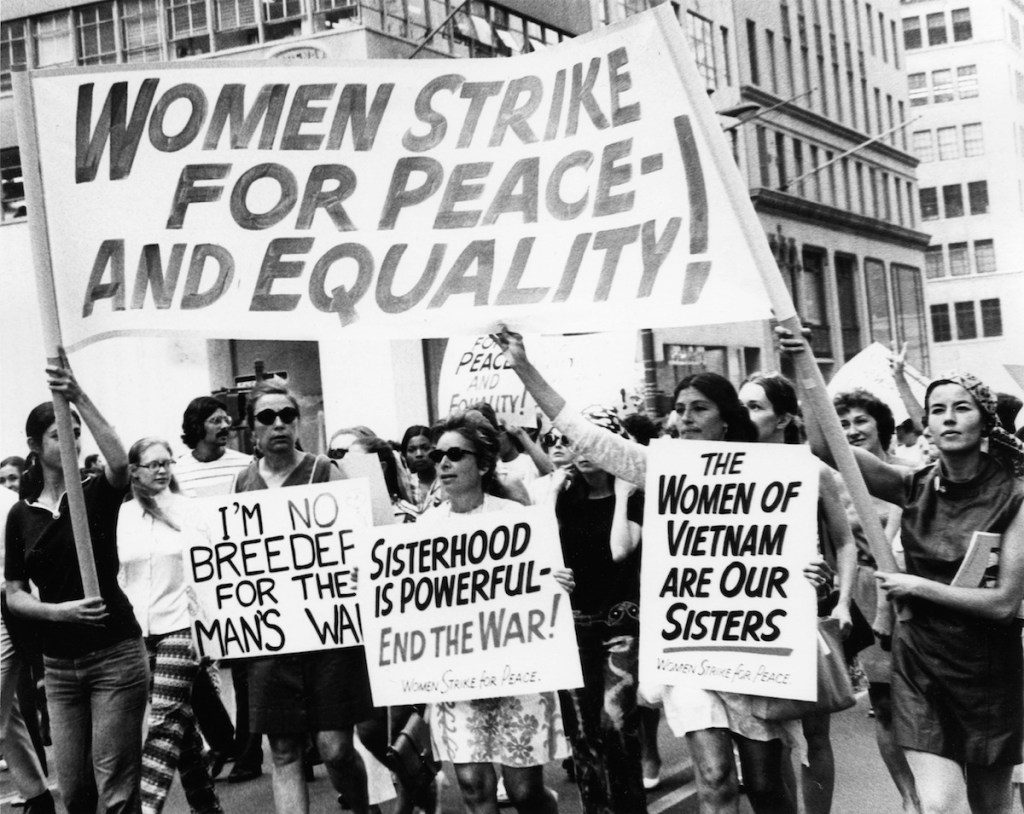
Women’s Strike for Peace-And Equality, Women’s Strike for Equality, Fifth Avenue, New York, New York, August 26, 1970. (Photo by Eugene Gordon/The New York Historical Society/Getty Images) 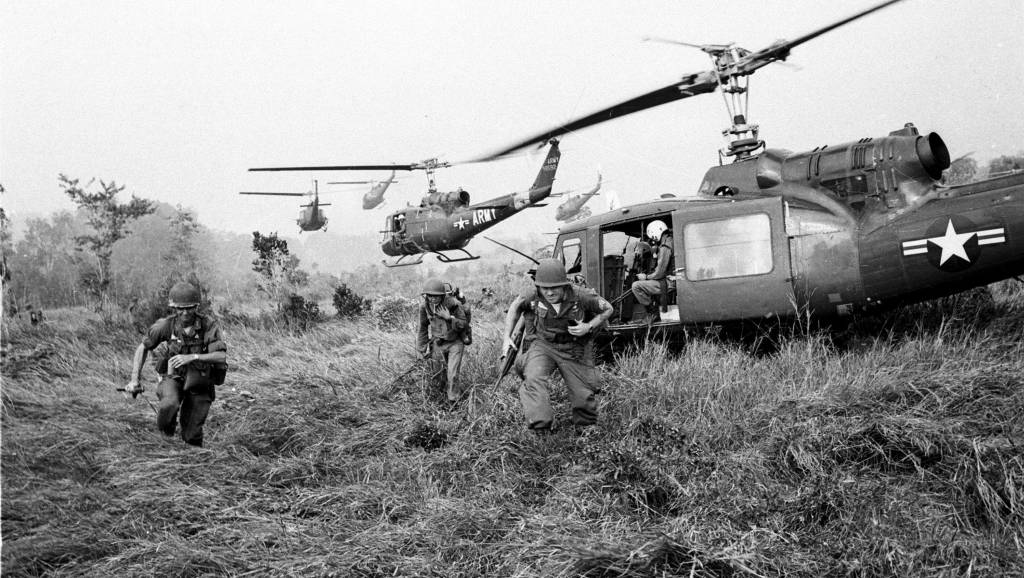
Jasper Colt
https://www.usatoday.com/story/news/world/2017/09/11/vietnam-war-timeline-u-s-involvement-over-decades/653693001/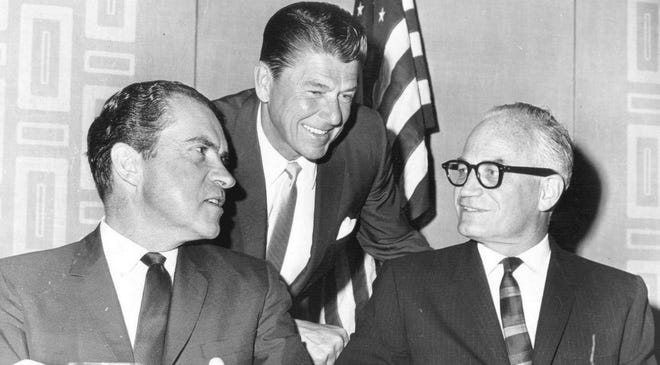
http://Arizona Republic Archive https://www.usatoday.com/story/news/politics/2014/04/13/goldwater-political-career-timeline/7666293/ 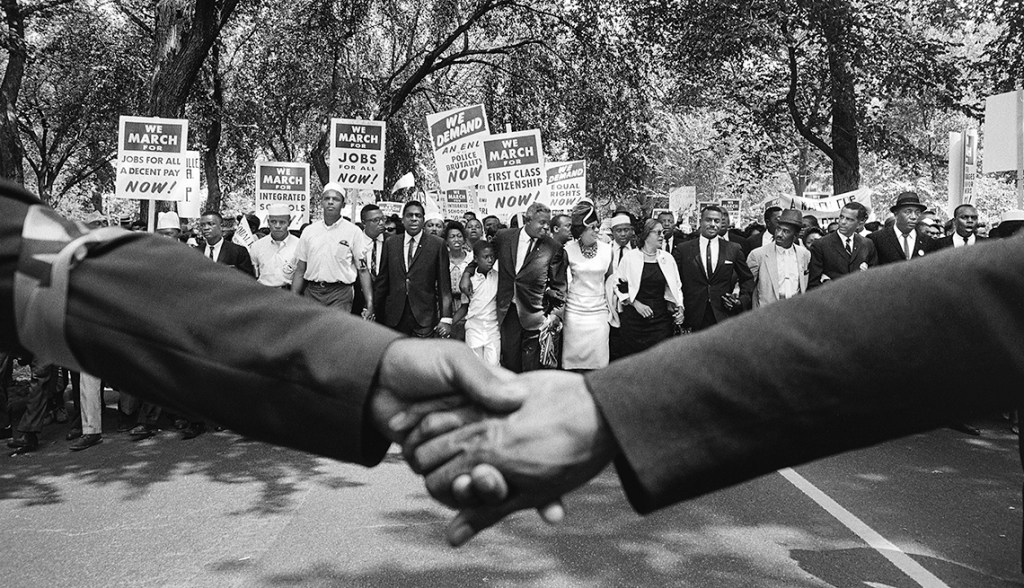
View, across hands held together, the front line of demonstrators during the March on Washington for Jobs and Freedom, Washington DC, August 28, 1963. Among those visible are, left from center, 11-year-old David Robinson (center) and his parents, American baseball player Jackie Robinson (1919 – 1972) and Rachel Robinson, and Civil Rights activists Rosa Parks (1913 – 2005) and Reverend Fred Shuttlesworth (1922 – 2011). The march and rally provided the setting for the Reverend Martin Luther King Jr’s iconic ‘I Have a Dream’ speech. (Photo by Steve Schapiro/Corbis via Getty Images)
ANALYSIS OF DOCUMENTS
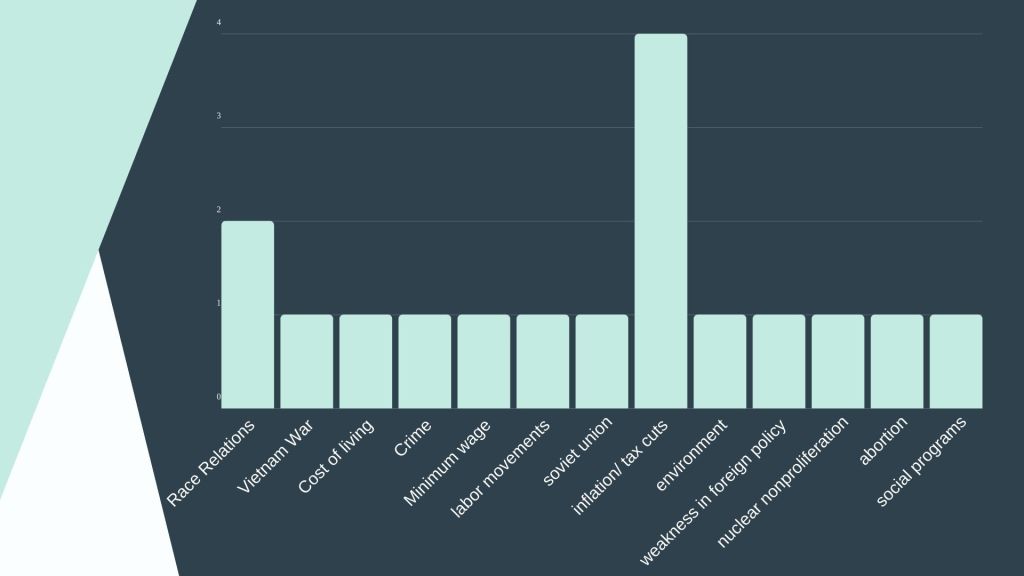
This is how frequently each specific topic was discussed between my 6 articles. Besides inflation/ tax cuts, no individual topic was brought up to bring any conclusive results about what was most important. That being said, this probably gives a wide view of the issues of importance in the election of 1980.

This graph categorizes the more specific topics listed above. In order they are: race relations, the economy, foreign policy, social programs, and other. This gives a broader view of the types of issues that were important and provides a more empirical sense of what would have been the prevalent topics. The Economy and Foreign Policy have the most mentions among articles.
Conclusion
“This silent majority and “New Right” consisted largely of white working class voters. On foreign policy issues, the Republican party is often seen as being “tougher.” They were more inclined toward increasing military budgets, which Reagan would do ten-fold, and being tough on foreign leaders in negotiations. Economically, their policies would have been particularly appealing to a middle class who felt that they were being left out of “Great Society” and counterculture reforms both economically and culturally. The GOP and Reagan’s stance on tax cuts and their focus on anti-inflation policies (even at the expense of lower-class individuals) would have swayed many voters to their party. These policies, supported by a new right, were not necessarily counter to the social and political movements that had gained traction and therefore would have been less alienating to moderates while still appealing to the conservative right. The subsequent election of Reagan would usher in a decade of financial and foreign policy that alter the American political landscape even today. “
– Final Paper
 Alexandra's Politics in Digital Archives Blog